Sunday, November 18, 2012

The Jungle


Because every good story should start with "deep in the Bolivian jungle," that´s where we will start this one!

 A 45 minute flight out of the capital La Paz, (taking us over Mt. Huayna Potosi  where we had been only 15 hours earlier-it refreshed memories of a lack of oxygen and waves of nausea) with a soft landing on a dirt air strip we were in Rurrenabaque.  The air was humid, hot and full of oxygen . Perfect!  We booked a 2 night 3 day pampas trip to begin the next day. The pampas is a massive expanse of flat jungle that is seasonally flooded by the  meandering rivers that make up the head waters of the Amazon. The next morning we rolled out of bed with stiff legs from mountain climbing  and limped our way to the awaiting Toyota land cruiser.  It was a  3 hour dusty drive to where the river began and our boat was waiting.  Cruising in our dugout with a 15hp outboard, it was only seconds before we saw our first alligator! Our guide Jimmy (pronounced "Yimmy") made sure to get us close enough to floss his teeth . After 3hrs of cruising up the river and seeing countless alligators, capibara, turtles, monkeys, pink dolphins and various colorful species of birds we arrived at our new jungle home. The huts were raised off the soil with boardwalks between for the rainy season and our lodge was complete with an alligator chilling on the beach front. The first evening we watched the sunset while enjoying a much needed cold cerveza. 

Huayna Potosi


Alli !


Capibara - largest rodent 


Turtle!

monkeys!


Howler monkey

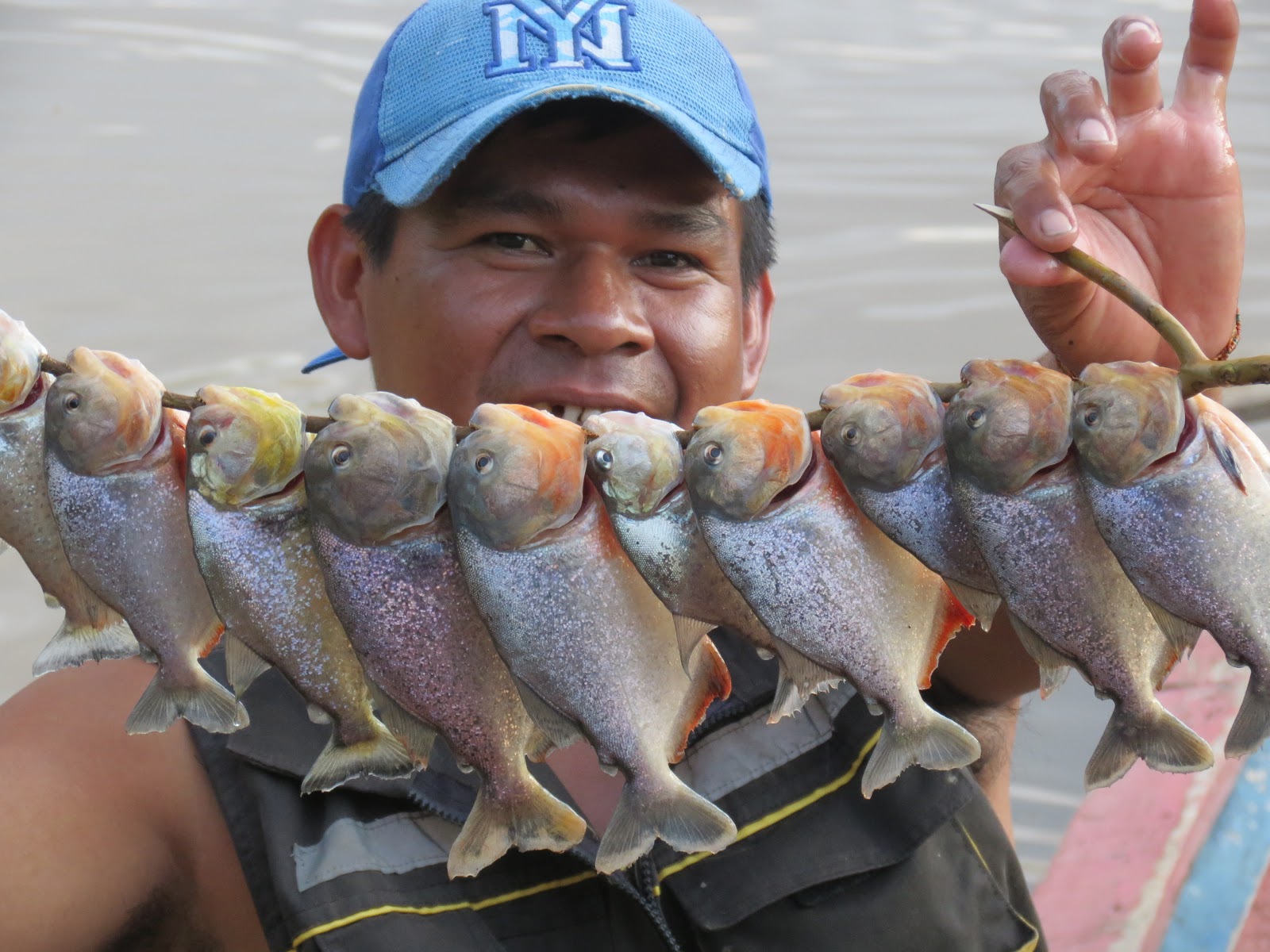
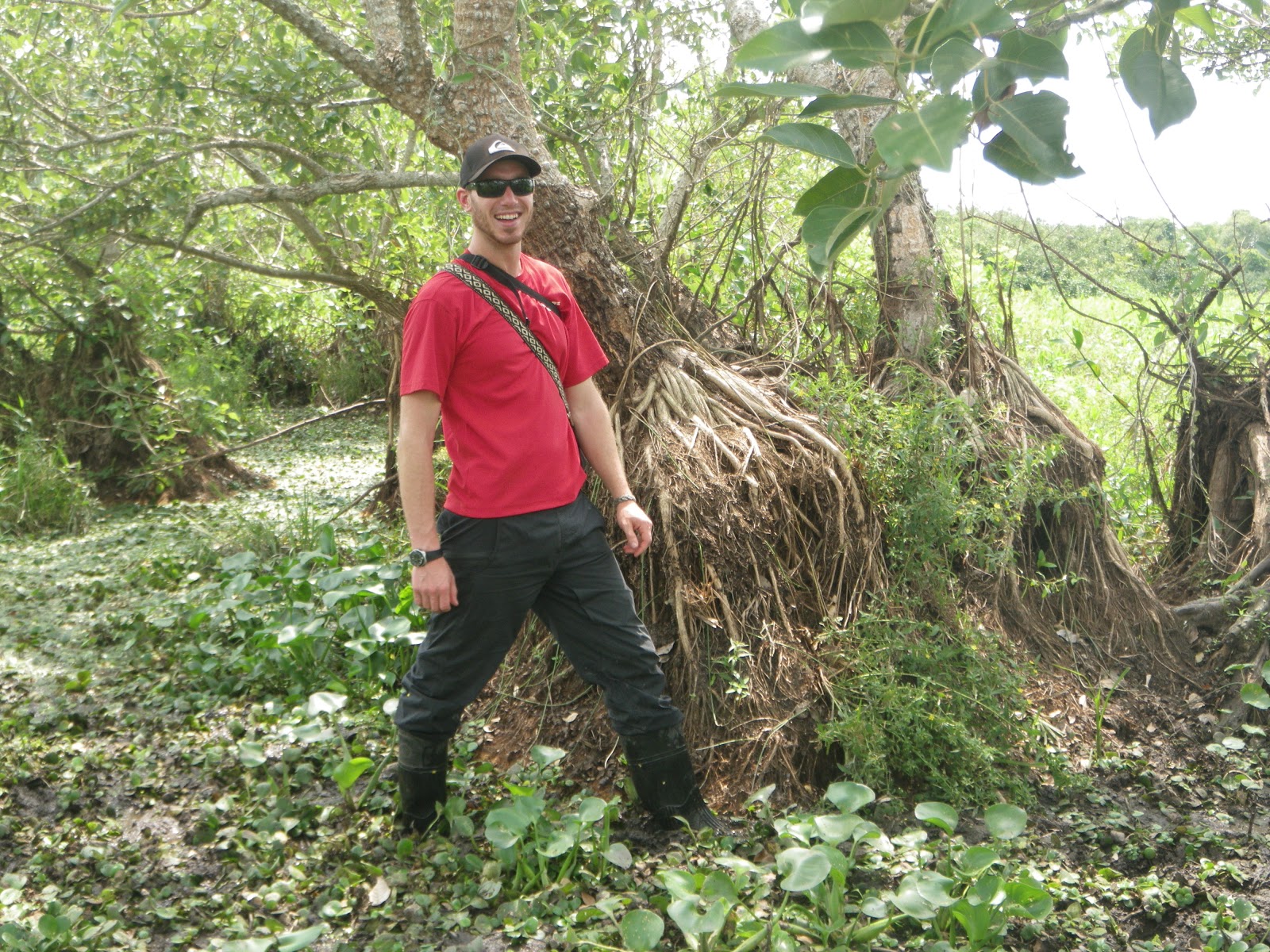
Day 2 began with a 5:30 wake up call by howler monkeys above our hut grunting so loud it sounded like an orchestra of poorly maintained "Detroit" diesel engines.  That morning we went on a  trek through the wetlands anaconda hunting. Sloshing through knee deep mud following the slimy tracks was creepy as hell. You never know when you might feel one slither away under your feet!  We didn't find an anaconda but we did see a 4 m long black caiman crocodile. A nap in the hammocks and the afternoon was spent pirhana fishing! Chris caught about 6 keeping 1 to try for dinner :) 


Alli in front of our lodge

Pirhana!


Yimmy and our dinner


Day 3 started with a sunrise boat ride and a swim with the pink dolphins. Jumping in the middle of the dark murky river where you can't see more than 5 cm deep is just crazy! Lining the shores where we were swimming was alligators and nipping at Chris' toes were pirhanas. Maybe it's better that we couldn't see what was beneath us! "Yimmy" made Chris feel better about the alligators by telling him that they are vegetarian.  Heading back to Rurrenabaque the amount of alligators and crocodiles still amazed us! A dusty jeep ride and we were back. A slightly delayed flight while the ground crews chased a cow off the air strip and we were on our way back to La Paz.  

Chris swimming!

EEEKKKKK


Areoporto


Huayna Potosi

La Paz is awesome! You could get lost in wandering the streets for hours! Through the witches market and black market you can get anything and everything you could possibly want - including dried llama fetuses!

Yum?¿


So colourful


Someone call an electrician!

There are tons of excursions out of La Paz so arranging our first one we had no idea what we were in for! Mount Huayna Potosi is a 6088m summit where you spend 3 days hiking and ice climbing. Sounds fun right? It was an amazingly horrible experience!

Huayna Potosi

Lake on the drive up


Day 1 was great! We got to base camp and donned our winter gear, crampons, and ice axes and hiked up the glacier to do some ice climbing. Getting used to the crampons was hard on the feet. It´s like hiking in very uncomfortable ski boots! We arrived at a part of the glacier where we harnessed up and practiced climbing up a vertical wall of ice! Every swing of the ice axe you just hope it sticks and doesn´t douse you with a cloud of ice down the shirt!

Getting used to the gear :)


So uncomfortable!

wahoo !

Swing that axe!


Day 2 we loaded up our heavy bags and hiked to "high camp".

Day 3 (Summit Attempt) The alarm went off at 12:00 midnight and only having got about 30 minutes of sleep we ate a small snack, put on our mountaineering gear and stepped out onto the glacier. The air was a cool -5 at 5200m where we began and we followed the dim beams of our headlamps like carrots infront our noses. As we pushed on up our lungs burned and hearts pumped battery acid, by the time we reached 5600m it was -12 deg C. Stepping and jumping across crevasses that swollowed our light made me thankful we were wearing harnesses and all roped together! In the dark we had now been hiking for three hours when we reached a technical section where we really found the use of our crampons and axes. The trail narrowed to a spine only about 0.5m wide sloping upward at 70 degrees where a fall to the left was directly into a giant cravass and a fall to the right was a roll down the steep glacier for 100m then a cravass. Take your pick! Digging in our ice axes and toes of our crampons we blocked out the exhaustion and the lack of sleep and moved on forward. Our guide set 7:00 as our turn around time (summit or not) because mountaineering when the sun has been on the ice for too long is dangerous. It was 6:00 and still another hour and a half from the summit, the effects of the altitude were beginning to take their toll on Chris. Making the call to turn back at 5850m was a difficult decicsion but necessary. The summit so close yet so far! The sun was now up and the view was spectacular. Hiking back down was just as hard as going up and Chris really getting sick now would dig a hole with his axe and puke in it then cover it up like nothing had happened!
This hike was the hardest but most rewarding thing I have ever done!

Our summit, 5850m at 6 am

The trail


I think this was a puke break, great smile Chris


So high!

One of the crevasses


Lago Titicaca


Lago Titicaca - Peru and Bolivia

Having not seen the ocean now for almost two months when we got our first glimpses to Lago Titicaca (the highest navigable lake in the world) we just pretended we could smell salt and seaweed. The lake shares a border with Bolivia and our stop in Puno was the last stop in Peru. On the wharf we jumped aboard our boat to spend the night on one of the islands on the lake. The boat was a fairly sturdy craft powered by an old diesel tractor engine that doesnt make it over 1200 RPM, I have seen dories rowed by fishermen travel faster! The man made reed islands where communities of people have lived for centuries seemed to be passing us! Our first stop was onto a reed island where we were showed how the islands are built. It takes about 9 months to build an island with layers and layers of reeds stacked on one another. The islands last about 30 years before the reeds are too rotten and then they set the island adrift and build a new one.


Isla Oros


Reed houses


Need reeds¿?


 Four hours later we were at Amantani Island where we would spend the night in a homestay. Mamas in traditional clothing were waiting for us at the dock and paired up with people. We ended up with a Papa who was nicely dressed and wearing the traditional black fidora. After brief introductions we started walking up the hill and we learned that our Papa was the Mayor of Amantani! When we got to the house we met our mama (the cutest 4´ 8" lady you´ve ever seen) were we had an amazing lunch. That evening we were all going to a fiesta down in the plaza. I came down the stairs and not knowing our mama had laid out all the traditional clothing we were to wear for the evening. She dressed me in a skirt, blouse, and waist band. Sucking in she just kept pulling my waist band tighter and tighter until I felt like I was wearing a corset and couldn´t breathe! Chris´dawned his poncho and butterfly toque and off we went. Dancing the evening away with our mama and papa was a night we will never forget. 
Hike up Amantani

At the fiesta with our mama and papa

Leaving the next morning for a stop over at Isla Taquille, we learned about the traditions of this island. When you are a single women your skirt is colourful, you wear red, green, yellow, ect..When you get married your skirt colour then becomes black. The single men wear red and white slouch toques. When their toque is tipped to the right it means they are looking for a wife. When the toque is tipped to the left they are looking for a "casual encounter." When the man is married his toque is all red and can be tipped in any direction! How genious is this! 


A 3 hour bus ride and we were across the border with no hassels into Bolivia. Jumping directly on a boat (again so slow!) we arrived on Isla del Sol. The island where the sun was born. We landed on the South end of the island and after hiking up the hill we found the cutest little hostel with an incredible view of the lake! Watching the sunset and enjoying the view was the perfect ending to our day. 


View from hostel


After carrying around the last of the donations for 2 months now we finally found the perfect little boy to give the soccer ball to :)


Isla del Sol